Breaking News
Only A Letter Can Change The Problems of Koyla Paschim Sonai School.
Reporter :
Editor :
National
>
Chattogram
19 July 2026 09:52 PM
364
Views
Staff Reporter, Chattogram
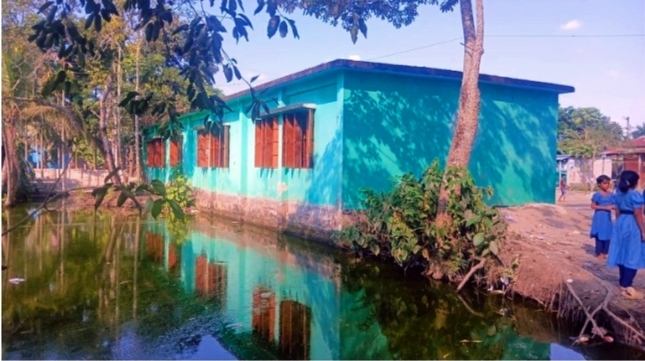
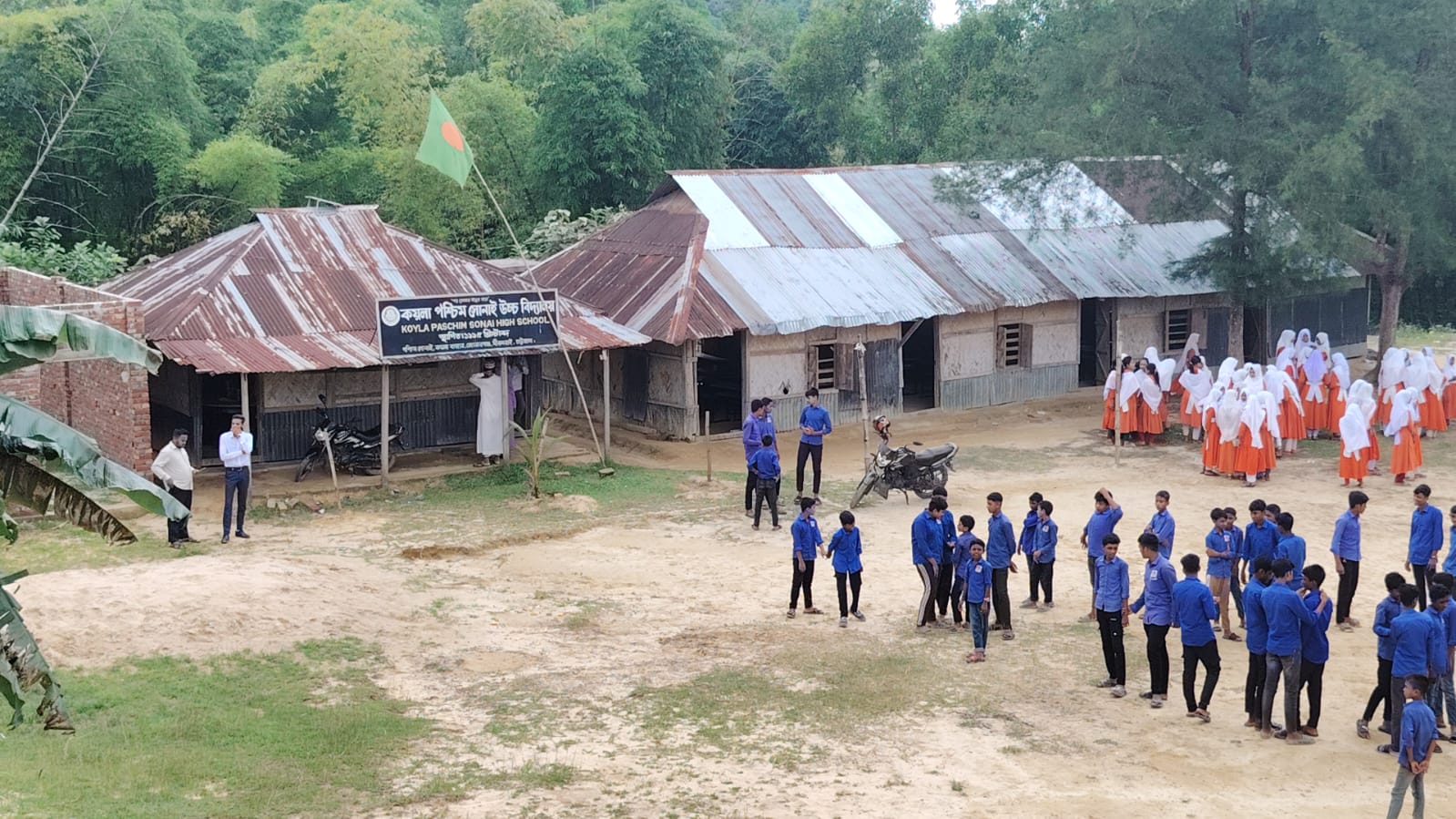
Roughly 30 kilometres of winding hill roads separate Mirsharai upazila headquarters in Chattogram from the village of Koyla Paschim Sonai. Tucked away in this lush, remote corner stands Koyla Paschim Sonai High School — the only secondary institution serving an area spanning nearly 10 square kilometres. This school, shaping the futures of 310 students, has gone three decades without a permanent building, a proper toilet, or a reliable source of safe drinking water.
The school was founded in 1995 by three local education enthusiasts — Mohiuddin, Jashim Uddin, and Fazlul Karim — on 75 decimals of land in the Korerhat union, driven by a desire to bring education to the hilly region. What began with just 6 teachers and 26 students has grown into an institution now teaching 310 students across the Business Studies and Humanities streams, more than 100 of whom belong to ethnic minority communities. Today, 10 teachers and 2 staff members run the school's daily operations. Through a long bureaucratic process, the school received establishment approval in 2020, permission to conduct classes in 2023, and this year, 2026, underwent a government inspection for formal recognition.
A recent on-site visit found that classes are held in a single tin-fenced, semi-permanent structure roughly thirty metres long and ten metres wide. A small adjoining room serves as the teachers' office, while the school also relies on two abandoned rooms borrowed from a nearby government primary school. That same visit found the main room crowded with seventh, eighth, and tenth grade students all sitting for their half-yearly exams at once — at least 150 students squeezed together for lack of space.
Describing the school's dire condition, headmaster Saiful Islam said that despite dedicating their lives to advancing education in this underdeveloped hill region, they have received no meaningful government support. He noted that the school has no building of its own, no fixed salary structure for teachers, no proper toilet, and no safe drinking water — and that snakes, dogs, and jackals frequently wander in through the broken fencing. Even so, he said, students consistently perform well academically, and he called for the school to be brought under MPO (government subsidy) status along with the construction of a proper building.
Speaking about the school's problems, ninth-grader Dipa Rani Tripura said the lack of a proper classroom means rain leaks through during storms, and students must sit crammed together in the heat. The school has no library, no common room for girls, no toilet, and no drinking water facility. Still, she said, the students draw inspiration from their teachers and keep striving to overcome these hardships.
Abdul Alim, a local parent, called the school a "beacon of education" for the area. Without it, he said, students would have to travel at least 17 kilometres to Korerhat for schooling. In this impoverished region, where many parents lack much education or awareness, he said, it is the teachers' relentless effort that has kept hundreds of students in school. He lamented that, aside from receiving free textbooks, the school remains excluded from all government facilities due to long-standing official neglect.
Investigation found that two former members of parliament from previous terms — Engineer Mosharraf Hossain and Mahbub Rahman Ruhel — had each separately written to the Directorate of Education Engineering requesting construction of a school building. Despite these efforts, however, nothing materialised, leaving the building crisis unresolved to this day.
Asked about the matter, Ferdous Hossain, Mirsharai's upazila secondary education officer, said he personally inspected the school soon after taking charge and, recognising the urgent need for a building, has requested the current local member of parliament, Nurul Amin, along with the necessary documentation, to help secure approval. He pledged full cooperation toward the school's development.
Mirsharai's Upazila Nirbahi Officer (UNO), Somaiya Akter, said she was not fully aware of the school's problems but would look into the matter soon. She added that if the school meets the requirements for MPO status, a recommendation would be sent to the ministry, and other assistance would be provided as far as possible.
For nearly three decades, this school has stood as the sole light of education in a remote hill community. What it needs now is a permanent building, a safe toilet, clean drinking water, a common room for girls, and formal government recognition. Without these, locals fear, this beacon of learning may struggle to keep burning despite all its struggles.
Related News