Breaking News
A Royal Palace Fades with Time, Yet Its Historical Remnants Survive.
Reporter :
Editor :
National
>
Sylhet
08 September 2026 06:06 PM
110
Views
Naeem Ahmed, Jaintapur-Gowainghat Sylhet.
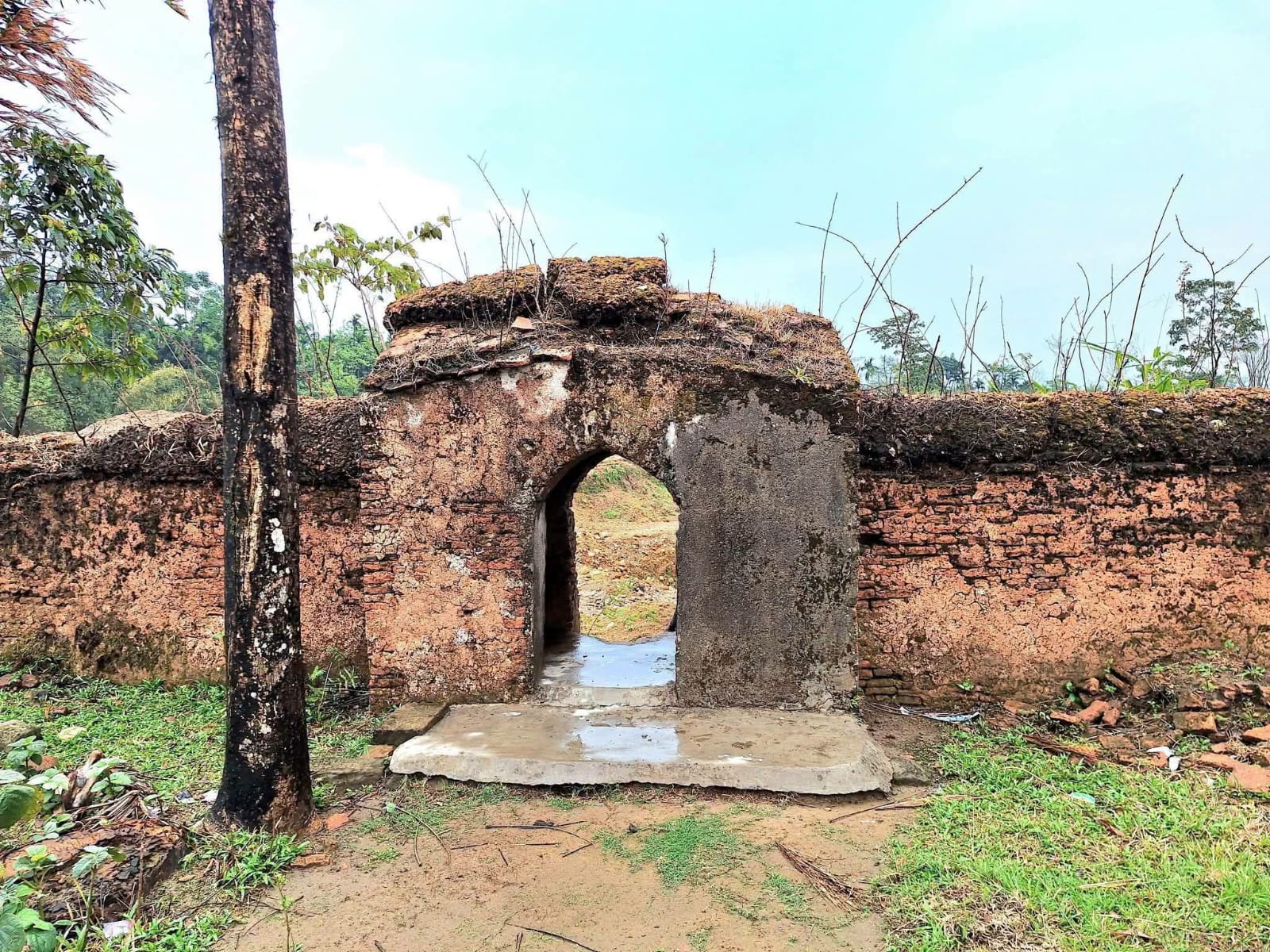
Standing silently today in the Ballapunjhi-Jumpar area along the Jaflong River in Sylhet is the historic Jaflong Rajbari, a silent witness to the region’s past. Once known locally as “Mailong Raja’s House,” most of the palace’s structures have disappeared over time. However, two surviving gateways and parts of its walls still bear the memory of several centuries of history and heritage.
According to Mohammad Abdul Aziz, author of History of Jainta Kingdom, Mailong Raja was the son of Jayanta Roy, the last king of the priestly royal dynasty of Jaintia. Historical accounts suggest that during the latter half of the 15th century, around 1450–1500, King Jayanta Roy divided the Jaintia Kingdom into several smaller principalities and distributed them among his sons. At that time, Jaflong was established as one of these principalities and was placed under the rule of Mailong Raja.
Historical records indicate that the capital of the Jaflong principality was established on the banks of the Jaflong River. The Jaflong Rajbari was one of the most important structures of that capital. Used as the residence of the royal family, the palace was not merely a royal residence; it was also an important part of the political and administrative history of the Jaintia Kingdom.
Over the centuries, however, most of the original structures of the palace have disappeared. What remains today represents only a small portion of what was once a large royal complex. Two gateways and parts of two walls are still visible at the site.
The thickness of the ancient walls and the architectural style of the gateways are particularly noteworthy. Based on their architectural characteristics, it is believed that these structures may be considerably older than some other historical structures in the Jaintia region.
Jaflong is well known to tourists from home and abroad for its extraordinary natural beauty. Its mountains, rivers and stone-filled landscapes attract visitors throughout the year. Alongside this natural beauty, the ancient historical sites scattered across the area further enhance Jaflong’s significance. However, due to a lack of proper preservation and publicity, important archaeological heritage sites like Jaflong Rajbari are gradually disappearing.
To preserve this valuable historical and cultural heritage, archaeological surveys, boundary demarcation, restoration and conservation initiatives are urgently needed. At the same time, incorporating the site into tourism development plans could help introduce visitors to a new historical dimension of Jaflong.
Related News