Breaking News
Momin Mosque: A Heritage Landmark of Pirojpur District.
Reporter :
Editor :
National
>
Borisal
27 September 2026 11:23 AM
137
Views
G.M. Adol
Pirojpur District Correspondent.
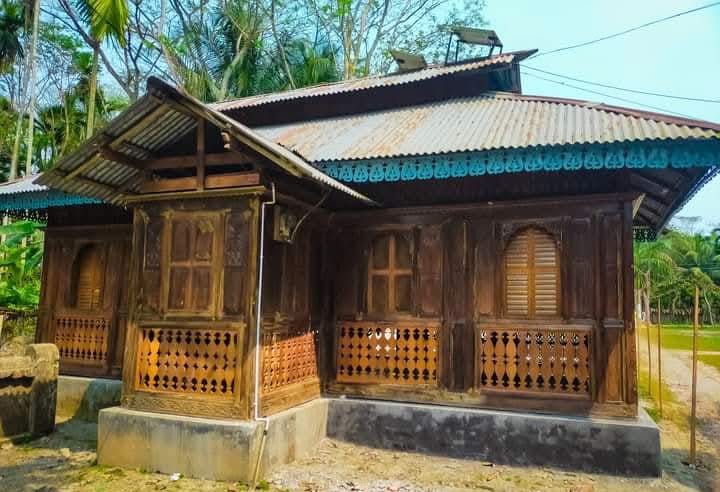
Many of us love travelling abroad, but perhaps we do not always realize that Bangladesh itself is home to numerous remarkable architectural treasures worth exploring.One such extraordinary example of Muslim architecture is the Momin Mosque, locally known as the Wooden Mosque.The historic mosque is located in Udaytara Burirchar village of Mathbaria Upazila in Pirojpur district.
On April 17, 2003, the Department of Archaeology of the Government of Bangladesh declared the mosque a protected archaeological heritage site. The wooden mosque has also been featured with illustrations in a 400-page book published by UNESCO on notable mosques around the world. It is regarded as a remarkable example of South Asian wooden Muslim architecture, renowned for its artistic craftsmanship and distinctive beauty.Built entirely of wood more than a century ago, the mosque features exquisite Islamic calligraphy carved into wooden surfaces. These intricate carvings have elevated the mosque's artistic appeal, making it a unique architectural masterpiece. For this reason, it is also popularly known among locals as the Wooden Mosque.
The mosque was constructed in 1913 by Moulvi Momin Uddin Akon, inspired by a desire to preserve Muslim heritage and religious traditions during the period of British India. Momin Uddin personally supervised the entire construction process. It is reported that the construction cost approximately Tk 15,000–20,000 at that time.Inspired by the design of a wooden mosque in Kashmir, Momin Uddin decided to build the mosque according to his own design. He brought shal, teak and ironwood from Assam, Tripura and Kashmir for its construction.The chief craftsman was
Sri Har Kumar from the Daihari Union area of Swarupkathi in Pirojpur. Under his leadership, 22 craftsmen began construction in 1913, and the work was completed in 1920.The mosque is adorned throughout with elaborate designs and intricate woodwork. Instead of using iron nails in the construction of the wooden structure, wooden pegs were used to join different parts together.
The mosque measures approximately 24 feet in length and 18 feet in width. To ensure adequate ventilation and create an attractive interior, another gable-roofed tin structure was built over the middle portion of the wooden platform.There are two windows each on the northern and southern sides and four windows each on the eastern and western sides. On the eastern side, the mosque has a single entrance featuring an intricately decorated doorway supported by two wooden pillars. Arabic calligraphy is carved into the wood above the entrance. The distinctive use of calligraphy throughout the structure has transformed the mosque into a unique example of traditional Islamic artistry
According to local residents, some restoration work was carried out in 2008 and 2021 under the supervision of the Khulna Museum. However, they believe the work was not sufficient to ensure the long-term preservation of the historic structure.They said that, to preserve the mosque for future generations, a protective roof should be constructed over it without altering its original wooden structure. Such a measure could help protect the historic woodwork from rain, storms and other weather-related damage.At present, a temporary shelter made of bamboo and corrugated tin has been erected in front of the mosque to accommodate worshippers because of the limited space inside. Local residents say the temporary structure obstructs the view of the historic mosque from the front and diminishes its architectural beauty.They also pointed out that an appropriate roof or artistic permanent shelter in front of the mosque would provide worshippers with protection from rain and excessive heat while preserving the visual appeal of the historic structure.According to locals, the mosque is relatively small, so only a limited number of people can offer prayers inside at one time. Since there is currently no permanent shelter outside, worshippers often face difficulties during adverse weather.They believe that placing the mosque within a carefully designed permanent roof or a strong, aesthetically pleasing shelter could provide additional space for worshippers while helping preserve the historic wooden structure and its architectural beauty.The century-old Momin Mosque therefore stands not only as a place of worship but also as an important testament to Bangladesh's rich architectural and cultural heritage. Proper conservation and sensitive restoration could help ensure that this remarkable wooden masterpiece remains intact for generations to come.
Related News